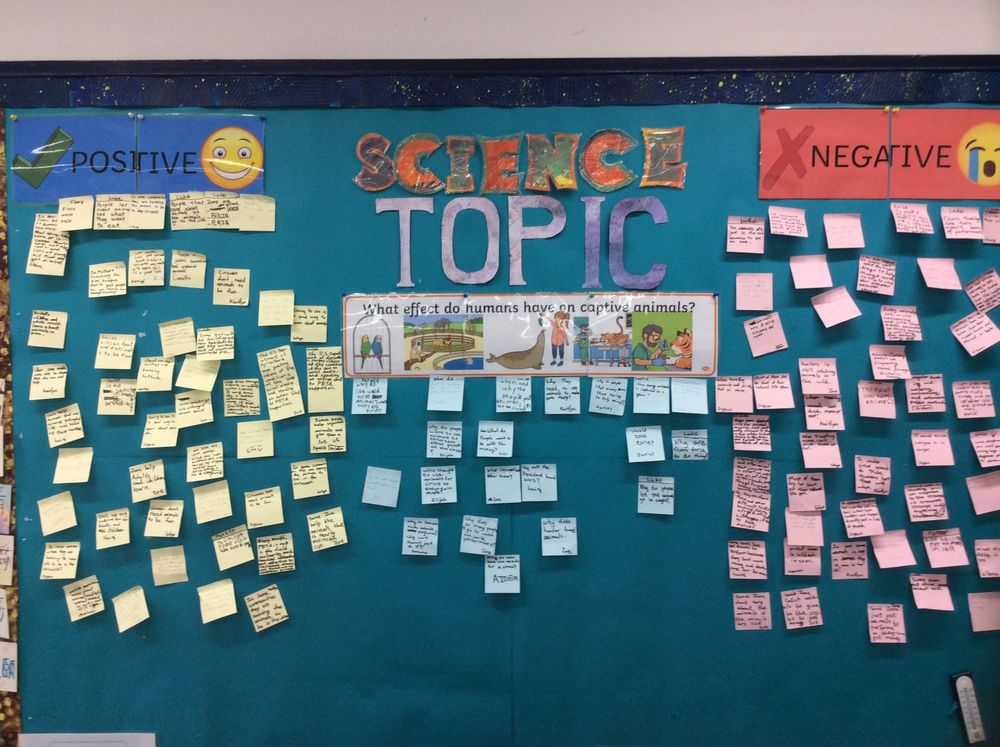
 4th grade
Animals in captivity
Alexander, Shanghai. Students debated the pros and cons of animals in captivity while learning persuasive techniques and the science of animal needs and habitats.
Project-based learning is a powerful way to engage students in rigorous, authentic learning. But without a well-designed unit plan, it's nearly impossible to cover the standards, get students to complete high-quality projects, and keep your sanity.

But it's tough to find the time to develop a project-based unit you're proud of during the school year. And if this is your first real try at PBL, even the first step can be hard.
These are solvable problems, if you begin with the end in mind.
When you've planned a unit that addresses your students' needs and interests, an authentic real-world problem, and the standards you need to teach, you can find the kind of success with PBL that most teachers only dream of.
Once you've written your first high-performance unit, repeating the process, and even “PBL-ifying” your whole curriculum, becomes an attainable goal.
This course was one of the most useful professional development courses I have taken. The structure and tasks were logical, well-organized, and relevant. I never wondered “Why am I being asked to do this?” I found the two fishbowl coaching sessions I did with Amy to be the most helpful part of the course. She really listened to my ideas and concerns and gave me feedback in real time that greatly improved my unit.
I've worked with schools and districts all over the world, helping teachers build PBL units they're proud of. This is the process I use to write curriculum for my clients, and any teacher can follow it.
You'll learn the same way your students will: by working on an authentic project from day 1 and sharing the final product with a real audience.
This is one of the best professional-level programs I've done in my whole teaching career. No comparison.
4th gradeAlexander, Shanghai. Students debated the pros and cons of animals in captivity while learning persuasive techniques and the science of animal needs and habitats.
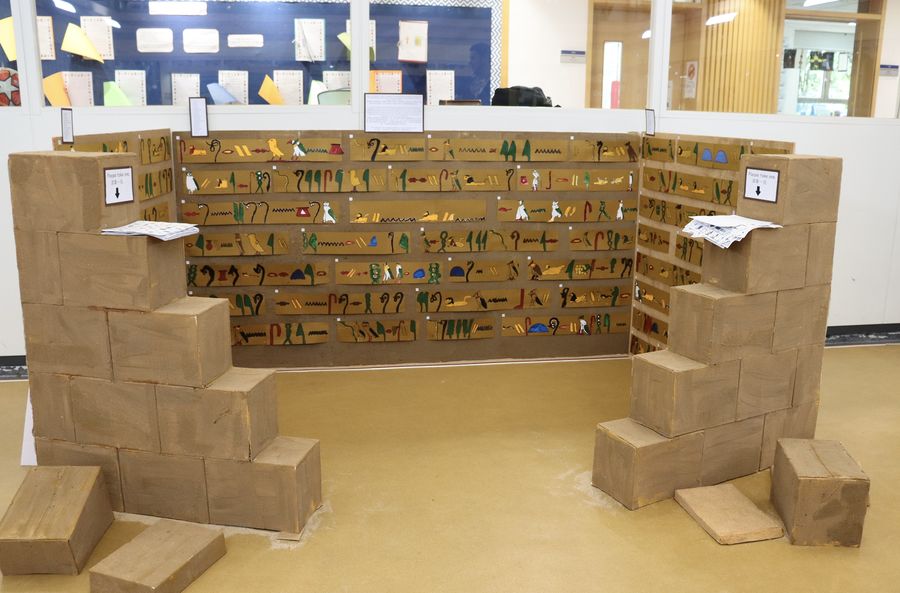 3rd grade
Rachael and Rebecca, Shanghai. Students created dual-language Ancient Egypt museum exhibits.
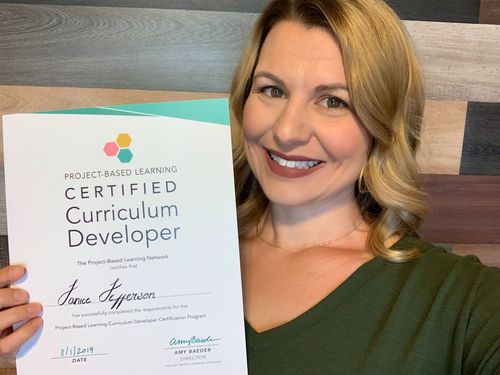 6th grade
Janice, New Jersey. “How can the engineering process along with rhetorical speech be used to solve a real-world problem?”
 Adult
AdultLarry, Idaho. Four college-level PBL scenarios for adult learners in an advanced welding program.
Amy is an independent education consultant and Director of the Project-Based Learning Network, which supports teachers across the United States and in 43 countries. Writing PBL curriculum and helping teachers design high-performance units is her full-time job. She holds an EdD in Educational Leadership & Policy from the University of Washington and remains a science teacher at heart.
The PBL Curriculum Developer Certification is backed by a 30-day, 100% money-back guarantee. We're confident the knowledge and skills you gain will exceed your expectations and make a lasting difference in student learning. If for any reason you aren't satisfied, contact us within 30 days for a full refund.
Self-paced, about 6–8 weeks, lifetime access. Pay in full or spread it over 12 months. Buying for teachers on your staff? Choose “Other people” and you'll assign the seats.
It's designed to be completed in six to eight weeks, so you finish with a complete PBL unit you can use right away. You have lifetime access, so you can work at your own pace and come back to the modules whenever you like.
Whenever you're ready. The program is self-paced, with check-ins at key points in your unit design. There's no expiration date.
Yes. You won't fall behind, and the program never expires, so you can return to it again and again.
Teachers who will write curriculum to use in their own classrooms or to share with others.
If you're a principal or other leader supporting teachers with PBL, the PBL Instructional Leader Program is built for you; we don't recommend this program unless you plan to write a unit yourself. Leaders often buy seats here for their teachers: choose “Other people” when you enroll, then assign the seats.
By writing a high-performance PBL unit. You're guided through each step, with detailed criteria for success, and your finished unit is reviewed before you're certified.
Through live Fishbowl Coaching with Dr. Baeder and the member community, where you can ask questions and share ideas with other educators working on their units.
Yes. Lifetime access means you can use the modules every time you write a new unit.
Yes: 25% off for 2 or more seats, applied automatically when you enroll. For whole-staff and whole-district pricing, or to pay with a purchase order, get a quote.
We're happy to document your participation and provide what the issuing organization needs. Because CEUs are issued locally, we can't issue them directly; your district or service agency can advise on the best route.
This program is fully online, but Dr. Baeder is available for contracted onsite professional development. Email amy@amybaeder.com for rates and availability.